


You are here
RDM in South Africa
Joy and I have just returned from South Africa, full of ideas and hugely impressed by the level of engagement with RDM that we encountered. We’re indebted to Professor Jaya Raju of the Library and Information Studies Centre at the University of Cape Town who made the trip possible and expertly co-ordinated the various visits and events. As well as running meetings and workshops at UCT, we visited the University of the Western Cape (UWC), the Cape Peninsula University of Technology (CPUT), Stellenbosh University and CALICO. The Western Cape Higher Education Libraries Interest Group of LIASA also hosted a one-day RDM workshop for delegates from across South Africa.
Across all these visits and events we were struck by the level of engagement and interest in RDM. There are not yet national mandates, but universities want to make sure they’re keeping pace with international counterparts. There was also an impressive willingness to share and desire to lobby for regional or national approaches to infrastructure development rather than everyone re-inventing wheels. That said, universities are being proactive and getting started where they can rather than waiting on solutions, being mindful of the need to use standards to permit future integration.
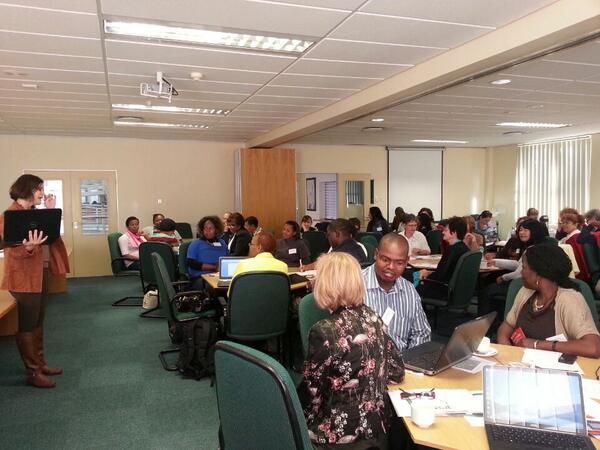 |
| Ina Smith of Stellenbosch University opening the LIASA workshop |
The LIASA workshop brought together representatives from universities, research councils and funders from across South Africa. Ina opened the event, which ran along the lines of the DCC roadshows. We gave a couple of introductory presentations, ran exercises and demonstrated the DMPonline tool. All the content from the event is on the DCC website.
The most interesting aspect of the workshop for us was hearing from Lucia Lötter of the Human Sciences Research Council. Lucia had conducted a brief survey in preparation for the event and reflected on the infrastructure and services available at a national level, as well as responses from individual universities on how they were preparing to support RDM.
Lucia gave some excellent advice. Three key recommendation I took were:
- Organisations are different so we don’t all have to do the same thing. Accept that different levels of maturity may be appropriate and focus your effort on the areas pertaining to your specific goals.
- Aim for more than just buy-in from senior management. What you want to drive for is institutional ownership or ‘executive custody’ so they take credit for any successes, but are equally responsible for failures. Senior management should actively support you rather than just letting you get on with it.
- Don’t wait – just get started! Doing what you can is better than doing nothing. Be pragmatic in your ambitions though, for example you can’t cater for all data types but you should at least have a record of what you hold.
We also ran a survey during the event using clicker technology. This aimed to capture a snapshot of RDM in South Africa. Some of the results were particularly enlightening. The audience perceived a greater role for professional / disciplinary bodies than we have seen in the UK, both in terms of RDM policy development and taking on a role in curating data. It was also interesting that the biggest skills gap was felt to be on the technical tools and software side, while the current gaps in provision were around training and support. There was also a greater receptiveness to data sharing than we’ve seen in the UK. The clicker technology was incredibly easy to use and gave us lots of food-for-thought for future DCC events. Watch this space!
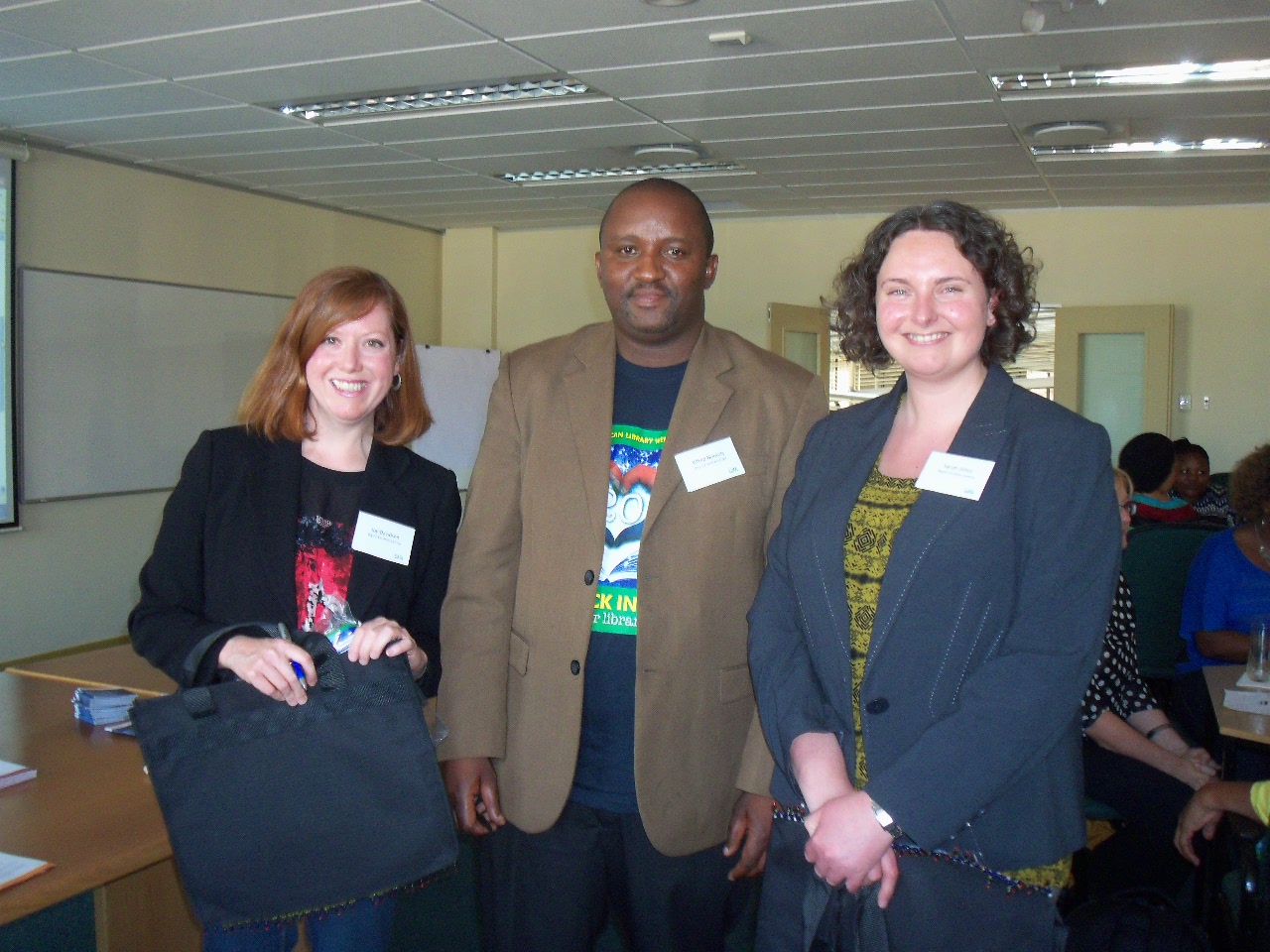 |
| Alfred Nqotole thanking the speakers on behalf of the WCHELIG LIASA |
We are very grateful to Ina, Alfred, Ingrid and Lynn of WCHELIG LIASA for arranging the event and making sure everything ran smoothly on the day. Apparently it all stems back to a talk Andrew McHugh gave on DRAMBORA several years ago. When asked about experts in digital curation, Ina remembered this burly Scot and invited us to give a webinar in spring last year. The collaboration has ensued since, with the success of that event inspiring our own webinar series. It was great to finally meet in person and put faces to names.
We have been overwhelmed by the South African hospitality during our visit. We have been taken on trips around the Western Cape, immersed in national culture and history, and given unique insights into the work of different universities. Everyone has been so generous with their time and ideas. There was a big desire to learn from the UK and potential to host reciprocal visits from the contacts we made. We’d love to profile the excellent work going on in UK unis, so look forward to future interactions.
Front page image of South African flag: CC-BY Kyknoord